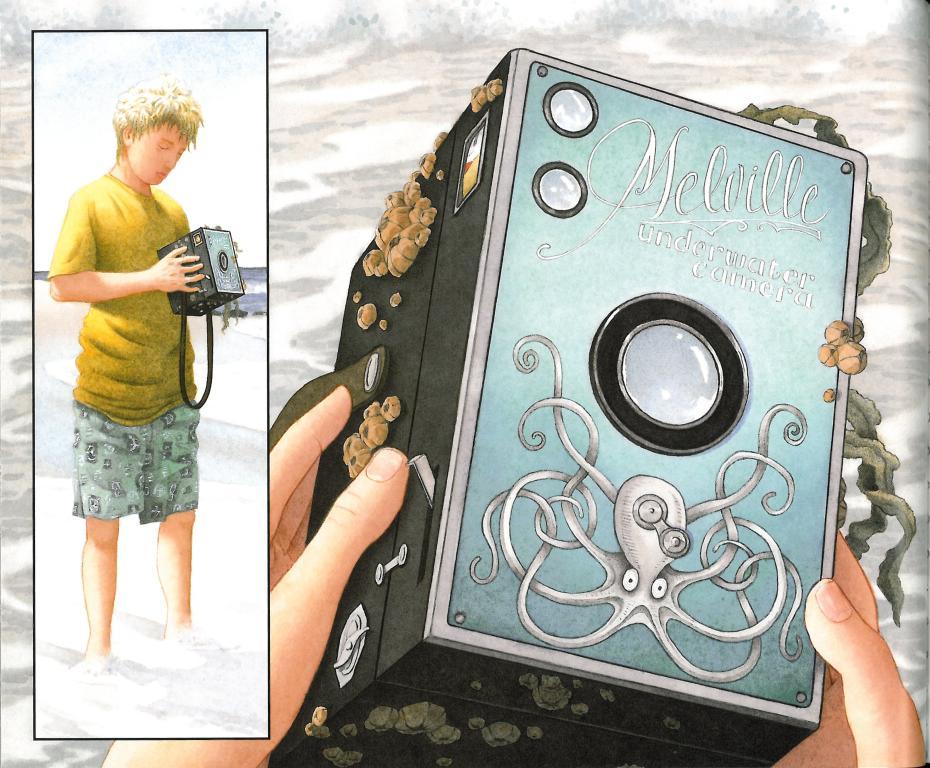
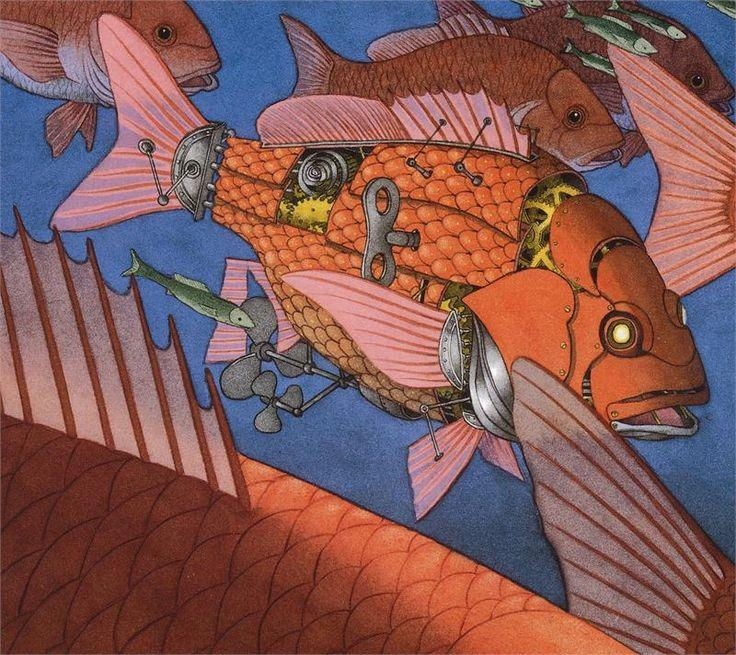
There is always something really interesting about a book that doesn’t use any words but still manages to tell a full story, Flotsam by David Wiesner is a perfect representation of that. At first, it may seem like a simple story about a boy at the beach who finds an old camera washed up on shore. Then as the story goes on and he gets the film developed, everything changes. The photos reveal these crazy, imaginative underwater scenes like giant sea creatures, mechanical fish, and hidden ocean worlds that make the story feel almost magical.
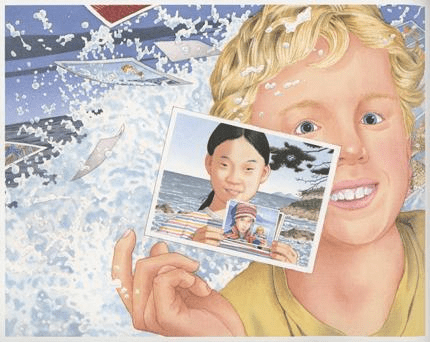
As I looked through the book, I realized the story isn’t just about what the boy sees but about discovery and connection as well. One of the most interesting parts is when the boy finds a picture of a girl holding a photo of another kid, and it keeps going back through time. This repeating pattern shows that the camera has been passed from person to person, connecting people across generations. At the end, the boy adds his own photo and throws the camera back into the ocean, continuing the cycle.
The illustrations really do all the work here. The bright colors and detailed images make everything feel alive and exciting. Even without words, you can clearly see the boy’s emotions like curiosity and surprise, just from his facial expressions and body language. The beach setting starts off normal, but quickly turns into something more mysterious as the photos are revealed.
Not having any text actually made the experience better for me because it forced me to slow down and pay attention to every detail. It also made me feel more involved, since I had to interpret the story in my own way. Some people might see this as just a fun imaginative adventure, I believe it is more. It showed a great perception on curiosity, storytelling, and how people are connected over time even if they are generations apart.
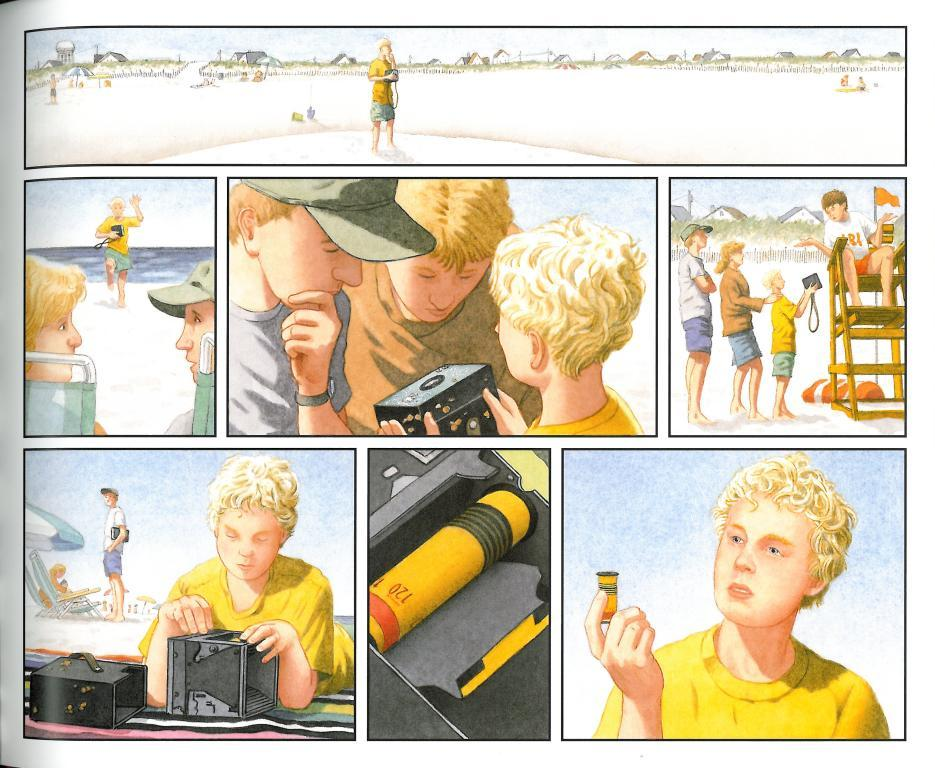
Overall, Flotsam and other wordless books show that you don’t need words to tell a meaningful story. Sometimes, pictures can say even more.
 Rylie's Blog
Leave a comment